British Nursery vs Montessori vs Reggio Emilia: What Changes for Your Child?
Choosing a nursery can quickly introduce parents to unfamiliar terms: British EYFS, Montessori, Reggio Emilia and play-based learning. But beyond these different approaches, there is a more important question: What will my child’s everyday learning experience actually look and feel like?
Understanding these approaches can help you look beyond the labels and choose an environment that supports not only what your child learns, but also how they explore, think and grow.
What is a British EYFS Nursery?
A British nursery generally follows the British EYFS curriculum (Early Years Foundation Stage), a framework designed to support children’s learning, development and wellbeing during their early years.
The EYFS covers key areas of development, including communication and language, physical development, personal, social and emotional development, literacy, mathematics, understanding the world, and expressive arts and design.
Learning takes place through play, exploration, conversations, stories, creative activities and meaningful everyday experiences.
Progress is not only about what a child knows. Growing confidence, stronger communication, curiosity and increasing independence are also important parts of their development.
How is Montessori Different?
The Montessori approach places a strong emphasis on independence and hands-on learning. Children are often encouraged to choose activities, work at their own pace and develop practical skills, while educators guide and support their learning.
This focus on choice and independence can help children develop a stronger sense of self, responsibility and confidence in their own abilities.
What About Reggio Emilia?
The Reggio Emilia approach places a strong emphasis on curiosity, creativity, relationships and exploration. Children’s questions and interests can help shape projects and learning experiences, while the environment is designed to encourage investigation, self-expression and collaboration.
This gives children opportunities to contribute their own ideas, explore their interests and become active participants in their learning.
Bringing Different Strengths Together at ORA
Every child learns differently. That is why choosing the best British nursery in Dubai should involve looking beyond the curriculum alone and considering how children experience learning every day.
At ORA – Nursery of the Future, the British EYFS curriculum provides a strong foundation, while purposeful play, innovation and a child-centred approach create opportunities for children to explore their interests and develop as individuals.
Children are encouraged to:
- Explore and follow their curiosity
- Make choices and develop independence
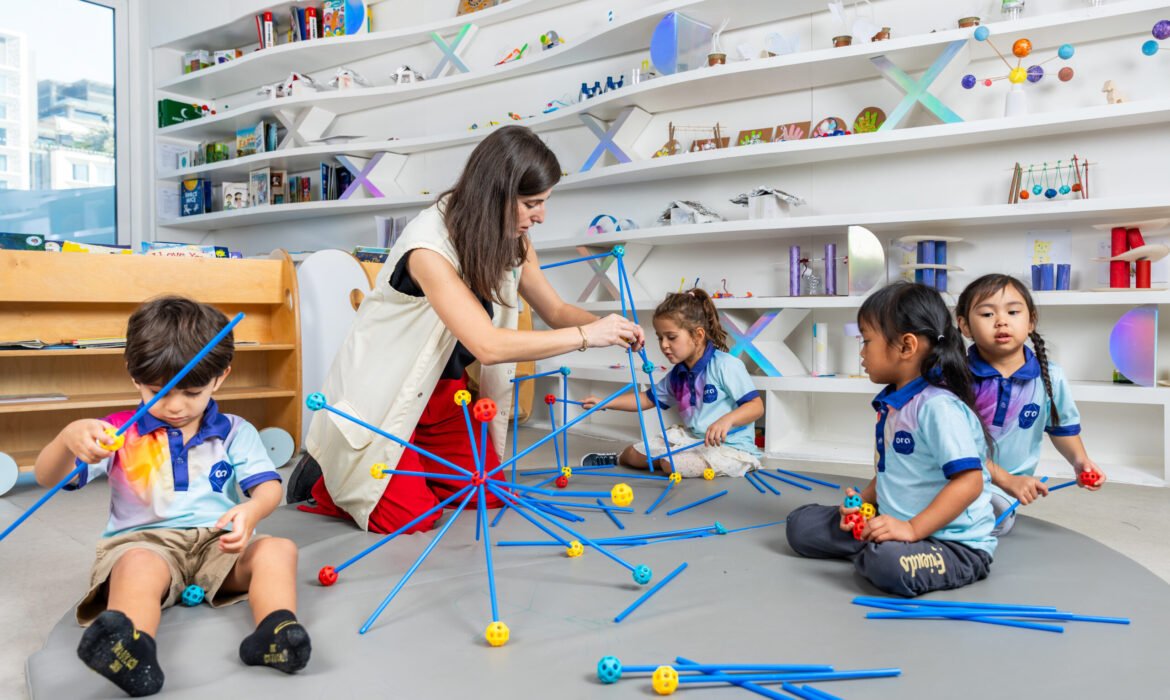
- Create, experiment and solve problems
- Communicate and collaborate with others
- Understand themselves and express their ideas
- Build confidence by trying new things
The aim is not simply to teach children information, but to help them become curious, confident and independent learners.
How Does Innovation Fit into Early Learning?
Innovation in the early years is not about introducing formal academics or technology too soon. It is about encouraging children to think creatively, explore possibilities and discover different ways of approaching a problem.
At ORA, the self approach encourages children to question, imagine, experiment, create and problem-solve through age-appropriate play and exploration. A simple question such as “What happens if I try this another way?” can encourage a child to test an idea, observe what happens, learn from the experience and try again.
Alongside this focus on innovation, ORA encourages children to develop a stronger sense of self. Through making choices, expressing their ideas and exploring their individual interests, children can gradually build confidence, independence and ownership of their learning. In this way, future-ready skills develop naturally through everyday childhood experiences.
FAQs
What is the British EYFS curriculum?
The Early Years Foundation Stage is a framework that supports children’s learning, development and care from birth to age five.
Is Montessori better than EYFS?
Neither approach is necessarily better for every child. Each has its own philosophy and structure, so parents should consider their child’s individual needs and how each nursery brings its chosen approach to life.
What is the main idea behind Reggio Emilia?
The Reggio Emilia approach emphasises curiosity, creativity, relationships, self-expression and learning through exploration and children’s interests.
How do I choose the best British nursery in Dubai?
Look for a strong curriculum, caring educators and an environment that recognises your child as an individual. ORA – Nursery of the Future combines British EYFS with purposeful play and innovation to encourage curiosity, confidence and independence.
Conclusion
The right nursery should give children opportunities to discover what they can do, what interests them and who they are becoming.
At ORA, Nursery of the Future, the British EYFS curriculum, purposeful play and innovation come together to support each child’s individuality while developing curiosity, confidence and future-ready skills.
Step into the Nursery of the Future. Book your tour today.
Sensory Play Explained: What Children Learn From Sand, Water and Messy Play
To an adult, it might look like a child simply pouring water between two cups or digging their hands into sand; or mixing colours until the carefully prepared activity becomes one big, wonderful mess. But to a young child, much more may be happening.
Sensory experiences give children opportunities to touch, move, investigate, experiment and make discoveries for themselves. This is one of the reasons play through learning can be such a meaningful part of early years education.
What is Sensory Play?
Sensory play involves activities that engage children’s senses and encourage exploration. It can include:
- Sand
- Water
- Paint
- Dough
- Natural materials
- Different textures
- Sounds and movement
The purpose is not necessarily to produce a perfect finished result. It is the process of exploring that matters. When a child squeezes, pours, scoops, mixes or builds, they are discovering what different materials can do.
What Can Children Learn From Sand Play?
A sand tray can become almost anything in a child’s imagination. Children may dig, build, fill containers, create roads or simply explore how sand feels as it moves through their fingers. During these experiences, they can practice skills such as:
- Hand-eye coordination
- Fine motor control
- Problem-solving
- Creativity
- Early mathematical ideas such as more, less, full and empty
Why is Water Play Valuable?
Pouring water may look simple, but children can discover important ideas through repetition. Such as “What happens when this cup is full?”, “Why does this object float while another sinks?”, “Can I move the water from here to there?” etc
Instead of simply being given an answer, children have an opportunity to test ideas themselves. That curiosity and experimentation are valuable parts of early years education.
What About Messy Play?
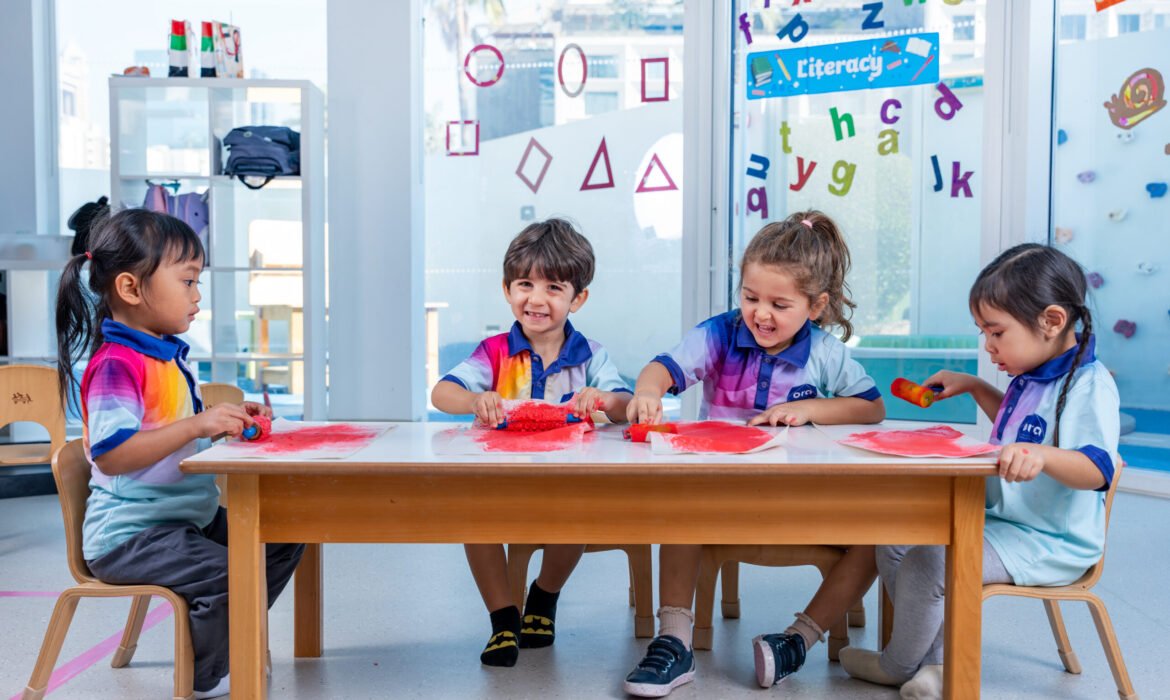
Paint-covered fingers and tables covered in foam may not look particularly educational at first glance. But messy play can give children freedom to explore without worrying about creating the “right” result. They may experiment with:
- Colours
- Textures
- Shapes
- Movement
- Cause and effect
- Imaginative ideas
Play Can Build Language Too
Sensory play creates natural opportunities for conversation. An educator might introduce words such as: Soft. Rough. Heavy. Empty. Cold. Wet. Floating. Sinking. Children begin connecting words with things they can actually see, touch and experience.
This makes language part of the activity rather than a separate lesson.
Why Does Play Through Learning Matter?
Young children are naturally curious. They touch things. Move them. Take them apart. Put them back together. Ask “why?” and then test the answer themselves. Effective play through learning gives that curiosity room to develop.
Rather than always telling children exactly what to do, educators can create opportunities for children to explore while asking questions that extend their thinking.
FAQs
What age is sensory play suitable for?
Sensory experiences can be adapted for different stages of early childhood using age-appropriate materials and close supervision.
What does sensory play teach children?
Depending on the activity, sensory play can support physical skills, communication, creativity, problem-solving, exploration and early understanding of mathematical or scientific ideas.
Is messy play important in early years education?
Messy play can provide open-ended opportunities for children to explore materials, experiment and express their own ideas.
How does play through learning work?
Children learn through meaningful play experiences while educators observe, interact, ask questions and introduce opportunities that can extend their thinking and development.
Conclusion
Sensory play turns simple moments of pouring, mixing and exploring into meaningful learning experiences. At ORA, Nursery of the Future, children learn through purposeful play that builds curiosity, creativity and confidence for the future.
Choose ORA for a future-focused start to your child’s early years.
How Does the Best Nursery in Dubai Prepare Children for the Future Without Rushing Childhood?
Every parent wants their child to grow into a confident, capable, and kind individual. At the same time, many parents worry that today’s fast-changing world may require children to learn more, earlier.
The question many families searching for the best nursery in Dubai ask is:
Can a nursery prepare my child for the future without taking away the magic of childhood?
At Ora Nursery of the Future, we believe the answer is yes.
Rather than rushing children into academics or surrounding them with screens, we create meaningful learning experiences where curiosity, creativity, confidence, and emotional wellbeing develop naturally through play. Our approach combines the British EYFS curriculum with experiences that encourage children to think independently, communicate confidently, solve problems, and become resilient learners.
Because the best preparation for the future begins with a happy, confident child today.
Childhood at Ora Looks Different
Imagine arriving at Ora on a typical morning.
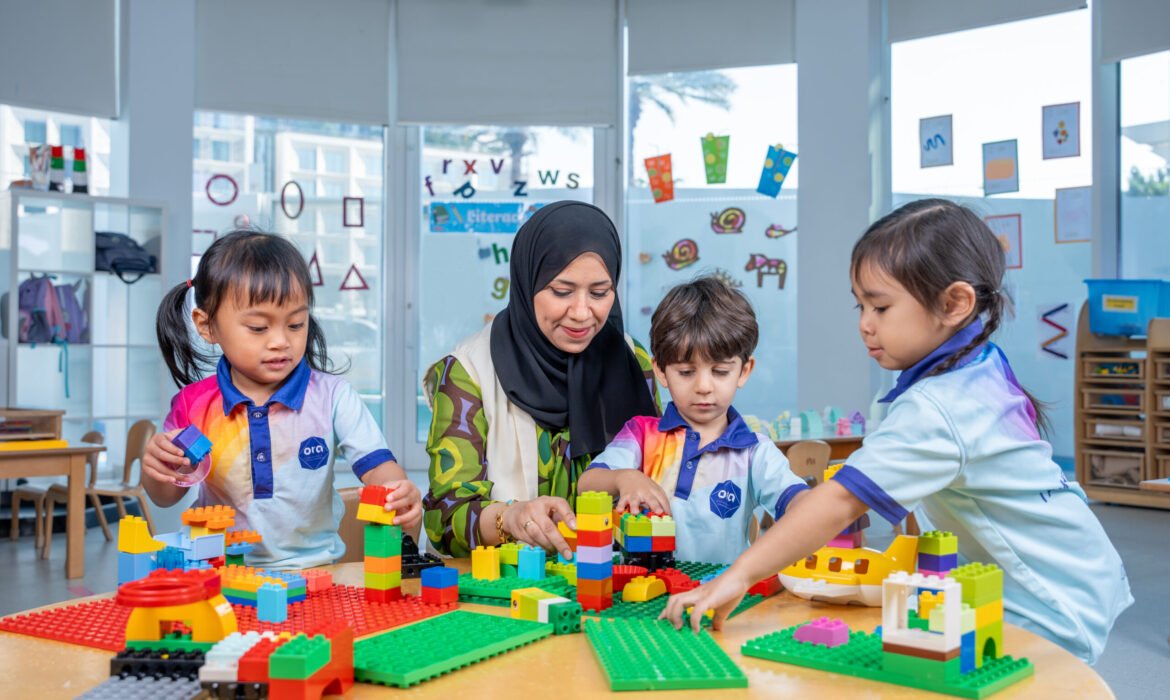
One group of children is building a city using blocks, discussing where the hospital, school, and homes should be placed. Another group is working together to solve a puzzle, taking turns to test different ideas. Nearby, a teacher is reading a story and encouraging children to predict what might happen next before acting it out together.
These moments may look like simple play.
In reality, children are developing communication, teamwork, decision-making, creativity, and confidence, all while enjoying every moment of being a child.
This is what learning looks like every day at Ora.
What Makes Ora One of the Best British Nurseries in Dubai?
Many nurseries follow the British EYFS curriculum, but at Ora, the curriculum comes to life through carefully designed experiences that help children become active participants in their own learning.
Our educators encourage children to:
- Ask thoughtful questions
- Make simple decisions independently
- Lead small group activities
- Solve everyday challenges together
- Express their ideas confidently
- Learn from mistakes without fear
For example, during project-based learning, children may work together to design a miniature “future city,” discussing how people travel, where parks should be built, and how communities help one another. Activities like these develop communication, collaboration, creativity, and leadership in a way that feels exciting and natural.
At Ora, learning is never about rushing ahead it is about helping every child grow at their own pace with confidence.
How Does Ora Introduce Future Skills?
Ora introduces age-appropriate experiences that strengthen the thinking skills children will rely on throughout life.
Children regularly explore:
- Sequencing through storytelling
- Pattern recognition using games and music
- Logical thinking with building challenges
- Problem-solving through role play
- Collaboration during team activities
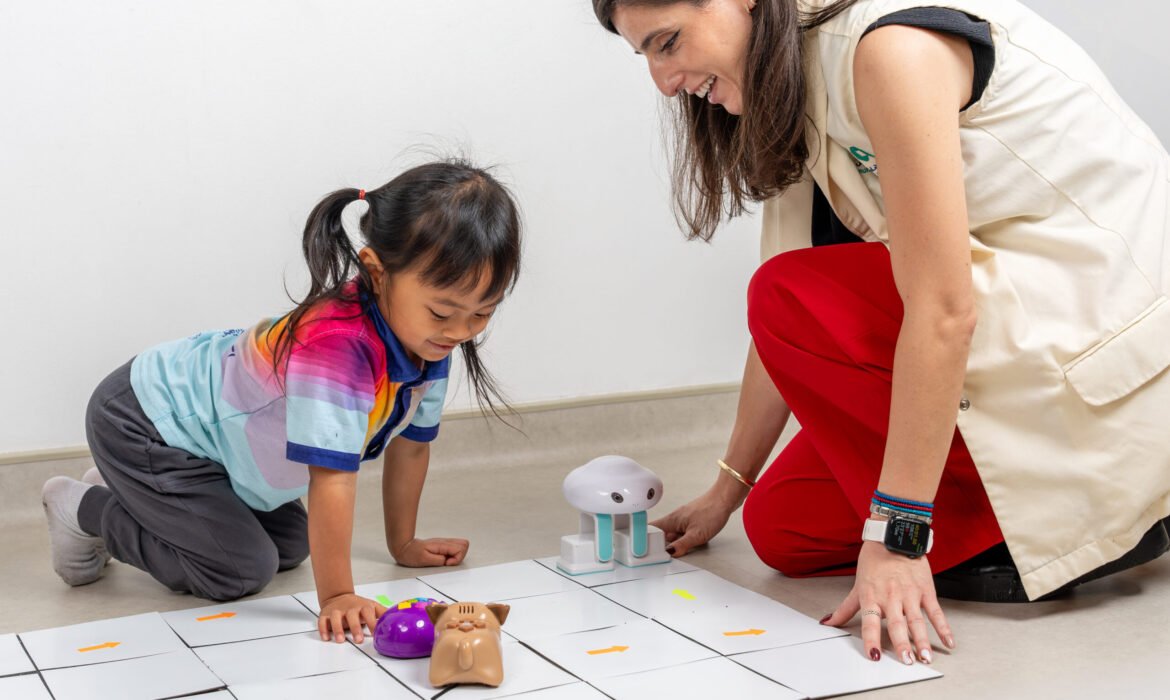
- Early pre-coding concepts using movement and play
These hands-on experiences help children organise ideas, recognise patterns, and think through challenges step by step, all essential skills for future learning without overwhelming young minds.
What About Artificial Intelligence?
At Ora, we introduce the foundations that support future understanding of AI in a simple, child-friendly way.
Children learn to:
- Notice patterns
- Compare and classify objects
- Predict what happens next
- Follow sequences
- Think logically
Why Parents Choose Ora
Families choose Ora because they see more than a nursery.
They see teachers who genuinely know every child, classrooms filled with curiosity, and an environment where children feel safe enough to explore, ask questions, and develop confidence.
Combined with experienced educators, the trusted British EYFS curriculum, innovative learning experiences, and a strong partnership with families, Ora provides an environment where children thrive both academically and emotionally.
Visit Ora Nursery of the Future
If you’re searching for the best nursery in Dubai or a British nursery in Dubai that combines exceptional early years education with purposeful play, confident leadership, emotional wellbeing, and future-focused learning, we invite you to experience Ora for yourself.
The best way to understand the Ora difference is to walk through our classrooms, meet our passionate educators, and see children learning with confidence, curiosity, and joy.
Book a personalised nursery tour today and discover how Ora Nursery of the Future is helping children build the skills, character, and confidence they need, while giving them the childhood they deserve.
Inside the Future Classroom: How Modern Early Years Education Is Shaping Tomorrow’s Innovators
The world our children will inherit is evolving faster than ever. Artificial Intelligence, automation, sustainability, and digital innovation are transforming the way we live, work, and learn. As these changes reshape the future, education must also evolve.
Modern early years education is no longer just about learning letters, numbers, and colours. It’s about developing curious minds, confident communicators, creative problem-solvers, and resilient young learners who can adapt to a changing world.
At Ora Nursery of the Future, we combine the trusted British EYFS curriculum with innovative learning experiences that encourage children to explore, question, create, and think independently. Rather than preparing children only for school, we prepare them for the future through age-appropriate, child-centred learning that inspires curiosity and lifelong growth. Ora’s educational philosophy embraces innovation while ensuring that meaningful childhood experiences remain at the heart of learning.
The Future Classroom Looks Different
Today’s classroom is no longer defined by rows of desks or one-way teaching.
A modern learning environment encourages children to:
- Ask questions
- Explore ideas
- Solve real-world challenges
- Work together
- Express creativity
- Learn through meaningful experiences
Children become active participants in their own learning instead of simply receiving information.
Innovation Starts with Curiosity
Innovation doesn’t begin with technology, it begins with curiosity.
Every time a child asks:
“Why?”
“What if?”
“Can I try another way?”
they are developing the mindset needed for future learning.
At Ora Nursery, educators encourage children to experiment, investigate, and discover solutions independently. These experiences build confidence while nurturing creativity and critical thinking from an early age.
Preparing Children for an AI-Driven World
Artificial Intelligence is becoming part of everyday life, but introducing children to the future doesn’t mean placing them in front of screens.
At Ora Nursery, children explore concepts that support future AI literacy through:
- Pattern recognition
- Logical thinking
- Sequencing activities
- Creative problem-solving
- Collaborative projects
- Cause-and-effect exploration
These experiences develop the thinking skills behind technology while keeping learning playful and age appropriate. Ora’s approach focuses on helping children understand concepts rather than becoming passive users of technology.
Technology with Purpose, Not Distraction
Technology should enhance learning not replace childhood.
That’s why Ora Nursery introduces innovation through meaningful, hands-on experiences rather than excessive screen time.
Children are encouraged to:
- Build
- Design
- Explore
- Imagine
- Test ideas
- Learn through real-world experiences
This balanced approach helps children develop confidence with future concepts while protecting the joy of exploration and play.
Building Skills That Last a Lifetime
The future will value more than academic knowledge.
Children will need skills such as:
- Critical thinking
- Creativity
- Communication
- Leadership
- Collaboration
- Emotional intelligence
- Adaptability
- Resilience
These lifelong capabilities begin developing during the early years through everyday learning experiences.
Why Families Choose Ora Nursery
Parents choose Ora Nursery because we offer:
- British EYFS curriculum
- Future-focused education
- Child-centred learning
- Innovation-driven experiences
- Leadership opportunities
- Creative learning environments
- Experienced educators
- Strong parent partnerships
- Safe and nurturing classrooms
A vision that prepares children for tomorrow while celebrating childhood today
Frequently Asked Questions
What makes modern early years education different?
Modern early years education focuses on developing creativity, communication, critical thinking, collaboration, and problem-solving alongside academic foundations.
Does Ora Nursery use technology for young children?
Ora introduces future concepts through carefully planned, age-appropriate activities that encourage logical thinking, creativity, and exploration while keeping hands-on learning at the centre.
Why are innovation and creativity important in early childhood?
These skills help children become confident learners who can adapt to new challenges, think independently, and solve problems throughout life.
How does the British EYFS curriculum support future learning?
The EYFS encourages exploration, communication, physical development, creativity, and personal growth, providing children with a strong foundation for lifelong learning.
Book a Personalised Nursery Tour. The future belongs to curious minds.
Discover how Ora Nursery combines innovation, creativity, and the British EYFS curriculum to inspire confident, capable, and future-ready learners.
From Play to Pre-Coding: How a British Nursery in Dubai Is Building Future Innovators
Today’s children are growing up in a world where technology, artificial intelligence, and innovation are becoming part of everyday life. While future careers may look very different from today’s world and the skills children need are creativity, adaptability, communication, and problem-solving which should be developed during the early years.
A modern British Nursery in Dubai should do more than prepare children for school. It should inspire curiosity, build confidence, and nurture the mindset needed to thrive in an ever-changing world.
At Ora Nursery of the Future, we combine the trusted British EYFS curriculum with innovative learning experiences that encourage children to think creatively, solve problems, and become confident learners while enjoying the magic of childhood. Ora’s future-focused philosophy introduces concepts like innovation, logical thinking, and exploration through meaningful, age-appropriate experiences.
Why Future Learning Starts with Play
Play is much more than entertainment; it’s how young children understand the world around them.
As children build towers, complete puzzles, explore patterns, and invent imaginative games, they develop essential skills such as:
- Critical thinking
- Communication
- Creativity
- Collaboration
- Decision-making
These everyday experiences lay the foundation for more advanced learning later in life.
What Is Pre-Coding?
Pre-coding doesn’t mean children sit in front of computers writing code. Instead, it introduces the thinking skills behind coding through fun, hands-on activities.
Children naturally develop pre-coding skills by learning to:
- Recognise patterns
- Follow sequences
- Solve simple problems
- Predict outcomes
- Think logically
- Organise ideas
At Ora Nursery, these concepts are explored using play through learning, storytelling, construction activities, games, and collaborative projects, making learning engaging while supporting future digital literacy.
The British EYFS Curriculum Meets Innovation
The British Early Years Foundation Stage (EYFS) provides children with strong foundations in communication, literacy, mathematics, physical development, and personal growth.
At Ora Nursery, we enhance this curriculum with future-focused learning experiences that encourage children to:
- Ask questions
- Explore new ideas
- Think independently
- Build confidence
- Develop leadership skills
By combining the strengths of the British curriculum with innovation, we create an environment where children become curious learners who enjoy discovering how things work.
Preparing Children for Tomorrow’s World
The future workplace will value skills that cannot be replaced by technology alone.
These include:
- Creativity
- Emotional intelligence
- Leadership
- Adaptability
- Collaboration
- Critical thinking
Through meaningful projects, problem-solving activities, and child-led exploration, Ora Nursery helps children build these lifelong skills from an early age while encouraging confidence and resilience.
Frequently Asked Questions
What is pre-coding in early childhood education?
Pre-coding introduces children to logical thinking, sequencing, and problem-solving through hands-on activities rather than computer programming.
Does Ora Nursery teach coding?
Our focus is on developing the foundational thinking skills behind coding through age-appropriate, play-based experiences that encourage curiosity and creativity.
Why is innovation important in a British nursery?
Innovation helps children become confident thinkers, creative problem-solvers, and adaptable learners who are prepared for a rapidly changing world.
How does the British EYFS curriculum support future-ready learning?
The EYFS encourages communication, exploration, creativity, personal development, and independent thinking which is essential for future learning.
Conclusion
The future belongs to children who are curious, confident, and ready to embrace new ideas. By combining the British EYFS curriculum with innovation, play-based learning, and age-appropriate pre-coding concepts, Ora Nursery helps children build the skills they need for success in school and beyond.
If you’re looking for a British Nursery in Dubai that prepares your child for tomorrow while celebrating every stage of childhood today, Ora Nursery offers the perfect environment to begin that journey.