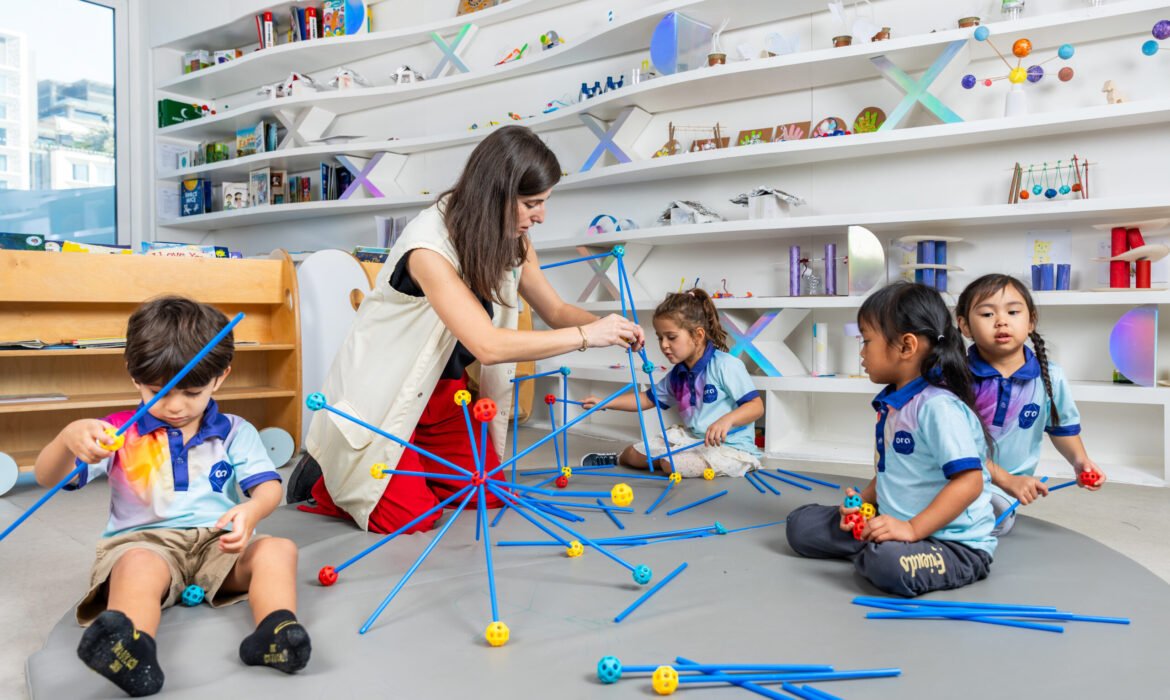
To an adult, it might look like a child simply pouring water between two cups or digging their hands into sand; or mixing colours until the carefully prepared activity becomes one big, wonderful mess. But to a young child, much more may be happening.
Sensory experiences give children opportunities to touch, move, investigate, experiment and make discoveries for themselves. This is one of the reasons play through learning can be such a meaningful part of early years education.
What is Sensory Play?
Sensory play involves activities that engage children’s senses and encourage exploration. It can include:
Sand
Water
Paint
Dough
Natural materials
Different textures
Sounds and movement
The purpose is not necessarily to produce a perfect finished result. It is the process of exploring that matters. When a child squeezes, pours, scoops, mixes or builds, they are discovering what different materials can do.
What Can Children Learn From Sand Play?
A sand tray can become almost anything in a child’s imagination. Children may dig, build, fill containers, create roads or simply explore how sand feels as it moves through their fingers. During these experiences, they can practice skills such as:
Hand-eye coordination
Fine motor control
Problem-solving
Creativity
Early mathematical ideas such as more, less, full and empty
Why is Water Play Valuable?
Pouring water may look simple, but children can discover important ideas through repetition. Such as “What happens when this cup is full?”, “Why does this object float while another sinks?”, “Can I move the water from here to there?” etc Instead of simply being given an answer, children have an opportunity to test ideas themselves. That curiosity and experimentation are valuable parts of early years education.
What About Messy Play?
Paint-covered fingers and tables covered in foam may not look particularly educational at first glance. But messy play can give children freedom to explore without worrying about creating the “right” result. They may experiment with:
Colours
Textures
Shapes
Movement
Cause and effect
Imaginative ideas
Play Can Build Language Too Sensory play creates natural opportunities for conversation. An educator might introduce words such as: Soft. Rough. Heavy. Empty. Cold. Wet. Floating. Sinking. Children begin connecting words with things they can actually see, touch and experience.
This makes language part of the activity rather than a separate lesson.
Why Does Play Through Learning Matter?
Young children are naturally curious. They touch things. Move them. Take them apart. Put them back together. Ask “why?” and then test the answer themselves. Effective play through learning gives that curiosity room to develop.
Rather than always telling children exactly what to do, educators can create opportunities for children to explore while asking questions that extend their thinking.
FAQs
What age is sensory play suitable for? Sensory experiences can be adapted for different stages of early childhood using age-appropriate materials and close supervision.
What does sensory play teach children? Depending on the activity, sensory play can support physical skills, communication, creativity, problem-solving, exploration and early understanding of mathematical or scientific ideas.
Is messy play important in early years education? Messy play can provide open-ended opportunities for children to explore materials, experiment and express their own ideas.
How does play through learning work? Children learn through meaningful play experiences while educators observe, interact, ask questions and introduce opportunities that can extend their thinking and development.
Conclusion
Sensory play turns simple moments of pouring, mixing and exploring into meaningful learning experiences. At ORA, Nursery of the Future, children learn through purposeful play that builds curiosity, creativity and confidence for the future. Choose ORA for a future-focused start to your child’s early years.