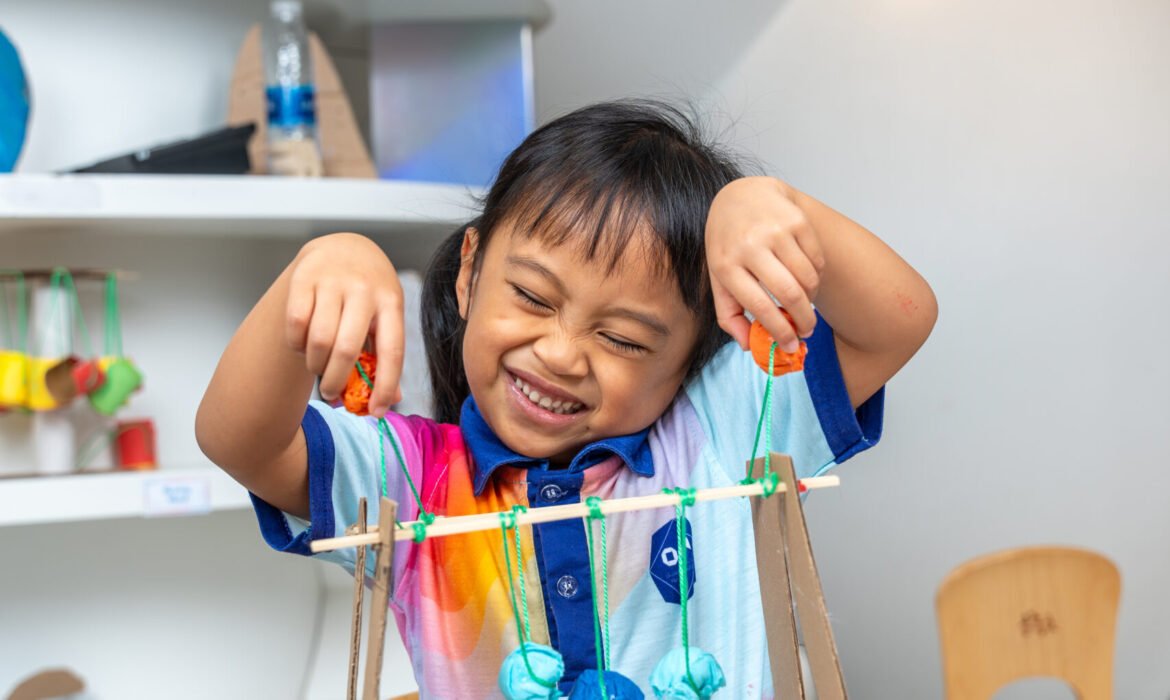
When we hear the word “coding”, it is easy to imagine computers, complicated commands and lines of code.
But some of the thinking skills behind coding can begin much earlier, and children do not necessarily need a screen to explore them.
Building towers, completing patterns, giving directions and arranging steps in the correct order can introduce children to ideas such as sequencing, logic, patterns and problem-solving. Through purposeful play based learning, these concepts can become part of everyday early years experiences.
What Does Coding Mean in the Early Years?
Early coding is not about expecting nursery-aged children to become programmers.
Instead, it can introduce ways of thinking that will later help children understand how instructions, patterns, and sequences work.
For example, children can begin exploring:
Sequencing: putting actions in the correct order
Patterns: recognising what repeats and predicting what comes next
Logic: understanding how one action leads to another
Problem-solving: finding a different approach when something does not work
Directions: following or giving simple step-by-step instructions
These concepts can be introduced naturally through play.
How Can Building Blocks Introduce Coding Concepts?
Consider a child trying to build a tall tower.
They choose the blocks, decide what goes first and begin building. If the tower falls, they have a problem to solve. Should the larger blocks go at the bottom? Should they build a wider base? What should they change next time?
This process encourages children to plan, test, notice what happened and try again.
The activity may look like simple block play, but the thinking behind it has similarities to the problem-solving process used in coding.
How Can Children Learn Sequencing Without a Computer?
Sequencing simply means understanding that things happen in a particular order.
Children experience this constantly.
For example: Pick up the block – place it on the tower – add another block.
Or: Take the cup – pour the pretend tea – give it to a friend.
Stories, movement games, puzzles, construction activities and everyday routines can all help children understand sequences. These experiences gradually introduce the idea that changing the order of instructions can change the result.
What Happens When the “Code” Goes Wrong?
One of the most valuable early coding concepts is understanding that something not working the first time is part of the process.
Imagine a child giving directions to a friend: “Walk forward. Turn left. Pick up the toy.”
If the directions lead to the wrong place, they need to work out what went wrong and change the instructions. In coding, this process is often called debugging.
For young children, it can simply mean: “That didn’t work. What could I change?”. This encourages persistence, flexible thinking and problem-solving.
Why Does Play Based Learning Work Well for Early Coding?
Young children learn by doing. With play based learning, concepts such as patterns, sequencing and logic are connected to experiences children can see, touch and explore.
Rather than memorising technical terms, children experience the thinking behind them.
A puzzle becomes a problem to solve. A pattern becomes something to predict. A construction challenge becomes an experiment. A mistake becomes a reason to try another idea. That makes early coding concepts relevant to the way young children naturally learn.
What Should Parents Look for in Technology-Focused Early Education?
The world children will grow into may look very different from the one we know today. That is why early education is increasingly about more than preparing children for the next stage of school, it is about building the skills to explore, adapt and think confidently in a changing world. For parents looking for the best British nursery in Dubai, future-focused learning can include age-appropriate experiences with coding, robotics and STEAM. But what matters most is not simply introducing technology, it is what children learn through it. The goal is not to replace play with technology, but to connect them thoughtfully, allowing children to enjoy childhood today while developing skills that can support them in the world of tomorrow.
Big Thinking Can Begin With Small Blocks
Early coding does not always begin with a computer.
It can begin with a tower that keeps falling, a pattern waiting to be completed or a child trying to explain how to get from one side of the room to another.
At ORA Nursery of the Future, technology and future-focused learning are approached through meaningful, age-appropriate experiences that encourage children to explore, think and solve problems.
Because before children learn the language of technology, they can begin developing something even more important: the ability to think about how things work.